Yurij Serhijczuk, UWVA Secretary
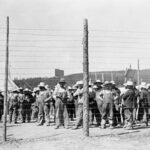
This past January, the Ukrainian War Veterans Association of Canada marked its 95th anniversary, established in Winnipeg in 1928 by 16 veterans of the Ukrainian National Army. Young men and women, who fought in Ukraine’s war for independence during 1917-1921, but lost, never gave up hope of an independent and free Ukraine – they included those who served in the armies of the Ukrainian National Republic, Ukrainian Sich Riflemen, and Ukrainian Galician Army. Some of these veterans were scattered across Europe, some ended up in South America, and others – in North America, including Canada. In forming an organization in a new homeland, the veterans faced many challenges, including discrimination, as witnessed by the internment operations (1914-1920) of Ukrainians and other Europeans who were from the former Austro-Hungarian Empire and who were considered enemy aliens by the Canadian authorities at the time. In addition, the Ukrainian community was disjointed, scattered, and comprised of various elements both in terms of politics (Communists, Hetmanites, and Nationalists) and religion (Catholics and Orthodox). Furthermore, the formation of a new national organization in a large country such as Canada was no easy feat; communication was limited to letter writing/telegrams and rudimentary telephone contact. Not everyone had automobiles in those days and furthermore the road network was not fully developed. Rail travel was one possibility and commercial air travel had not yet commenced. Adding to the difficulties was economic uncertainty; the market crash and the beginning of the Great Depression in 1929. It seemed that the challenges outweighed the opportunities for forming a new organization of relatively new immigrants and first and second generation Canadians.
Besides assisting Ukraine, initiators of the UWVA were determined to bring Ukrainian Catholics and Orthodox together. Religion was not to be a divisive factor. UWVA members fought side-by-side for an independent Ukraine, irrespective of their religious beliefs.
One of the great inspiring historical moments for the young organization, was to have Col. Yevhen Konovalets, former military commander of the Ukrainian National Republic, former head of the Ukrainian Military Organization and the leader of the Organization of Ukrainian Nationalists visits Canada in 1929 and meets with UWVA members to engage them in the international network in support of Ukraine’s liberation.
The UWVA’s contributions to the community were many. On the UWVA’s initiative, a women’s auxiliary was formed, which in 1930 (and formally 1934) became the Ukrainian Women’s Organization of Canada (UWOC); the Ukrainian National Federation of Canada (UNF) was established in 1932; and also, the Young Ukrainian Nationalists (later, the Ukrainian National Youth Federation – UNYF) in 1934 and the Ukrainian Liberation (Penny) Fund in 1935. This became known as the system of the UNF of Canada and Affiliate Organizations.
Especially during its early years, the UWVA’s focus was centred on assisting their brethren in Ukraine, by bringing to light the plight of Ukraine by lobbying the Canadian government, and having contacts with the Royal Canadian Legion. The UWVA financially aided Ukrainian war invalids who fought in the war of independence during WW I and lobbied on behalf of Ukrainian political prisoners held in Polish prisons. They financially assisted Ukrainian schools and Prosvita (enlightenment) organizations in western Ukraine. The UWVA received a receipt from the Ukrainian Association for the Assistance of Invalids (Lviv) in the amount of $3,000.00 U.S. dated April 24, 1929 – a large sum of funds for those times. The War Veterans monetarily assisted the widows of Ukrainian leaders Symon Petliura and Col. Yevhen Konovalets (who were both assassinated by Soviet agents). Many leading members of the UWVA were also members of the Organization of Ukrainian Nationalists and had ties with the organization in Europe.
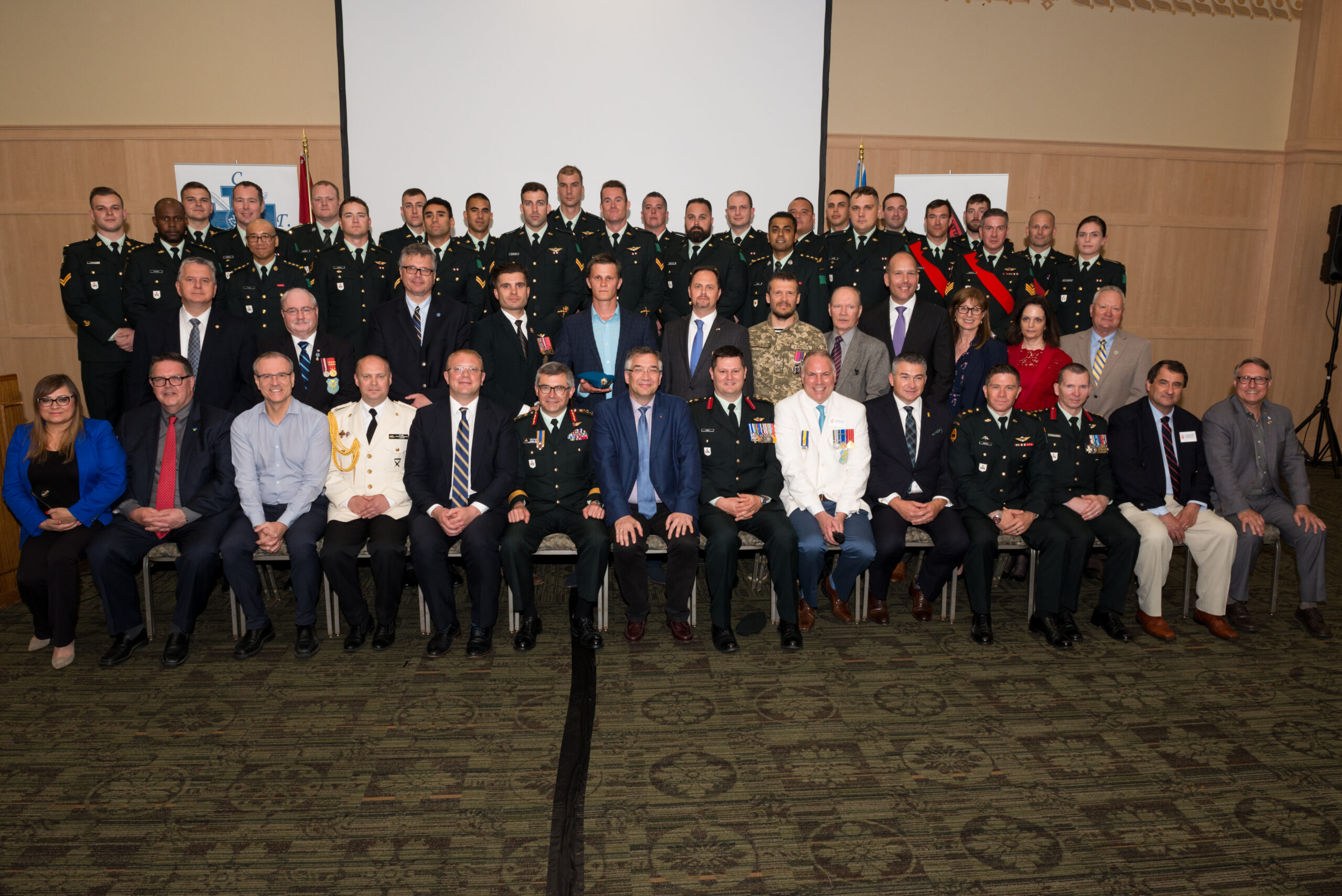
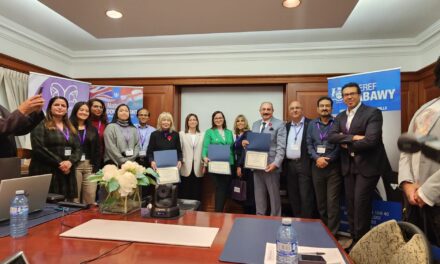
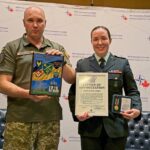
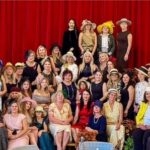
UWVA Operation Unifier Appreciation Evening, Toronto, 2018
Although the main focus of the UWVA was championing the agenda for a free and independent Ukraine, it also propagated economic, cultural, and educational projects. The 1930’s brought tough economic times for all, particularly new immigrants, who didn’t know the language, have needed skills and, in some cases, suffered from discrimination. The UWVA established the Kalyna Cooperative in Winnipeg in 1930 and by the late 1930’s and early 1940’s; the UNF/UWVA members established a number of credit unions throughout Canada, including Ukrainian Credit Union Limited. Members of the UWVA established what would become the mouthpiece for the UNF of Canada and Affiliate Organizations, The New Pathway Ukrainian Weekly in 1930 (Edmonton).The Veterans Association held commemorative functions in tribute to various important Ukrainian historical dates; they organized musical bands and choirs and, at times, performed for the broader Canadian community.
During the height of the Holodomor (Man Made Famine Genocide) in 1933 perpetrated by the Soviet Communist regime in Soviet Ukraine, the UWVA protested the murder of millions of Ukrainians. UNF/UWVA members assisted the UNYF in establishing a flying school in Oshawa prior to WWII, and it was seen as an instrument to assist both Canada and Ukraine. The school provided invaluable training for those who soon were to join the Canadian war effort.
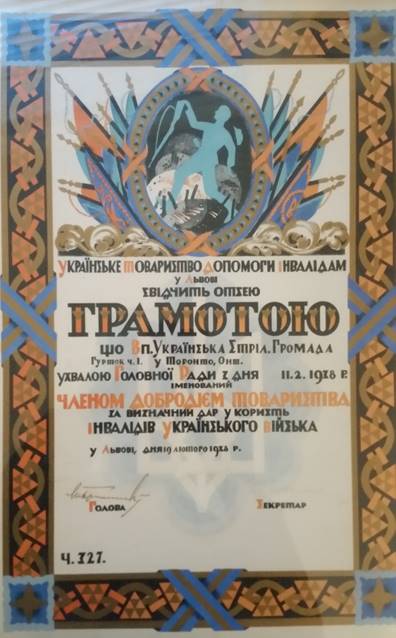
Certificate, issued by the Ukrainian Society of Aid to the Disabled in Lviv to the UWVA Toronto branch. Dated Feb. 19, 1938
From the outset of WW II, the UWVA advised the Canadian government of its readiness to serve in the Canadian Forces. Many from the UNYF/UNF/UWVA served at home and overseas and made the ultimate sacrifice for Canada and democracy. The UWOC plays a key role at home, by contributing to the war effort through various initiatives to assist the soldiers overseas and also through the Red Cross. By the time WW II breaks out (approximately 10 years from its outset), from its inception, on the initiative of the UWVA, there are “50 UNF, 19 UWVA, 33 UWO and 38 UNYF Branches across Canada.” (Marunchak, Michael H. (1970). The Ukrainian Canadians: A History. Winnipeg, Ottawa: Ukrainian Free Academy of Sciences, p. 401.
To this day, the UWVA continues to uphold many of the ideals of its founders. The mission of the UWVA almost a hundred years later is to:
1. Foster the relationship between the Ukrainian Canadian community on matters of joint interest with the Canadian and Ukrainian military.
2. Support military-related projects of interest, such as veterans’ programs
3. Build awareness of Ukrainian Canadian and Ukrainian military contributions.
4. Participate in ceremonial events representing Ukrainian Canadian veterans.
For some years now, the UWVA has organized and led the Annual Remembrance Day ceremony (jointly with the Ukrainian Canadian Congress Toronto Branch) in Toronto. It has organized several Operation UNIFIER Appreciation Events (in support of Canadian military who have assisted training Ukrainian soldiers). It has supported Ukrainian military officers who are attending the Canadian Forces College in Toronto. The UWVA played a key role in the creation of the documentary film, “A Canadian War Story”, about the contribution of Ukrainian Canadians in the Canadian Armed Forces during WW II. The organization has sponsored the Bobersky Exhibit at the Oseredok Ukrainian Cultural and Educational Centre in Winnipeg in 2019, showcasing 43 recently uncovered images of World War I battles in Ukraine, as well as financially supporting the “Ukraine: Land of the Brave” display in Toronto – a multimedia exhibit that uses the full power of immersion to convey moving real-life information about Russia’s violence to the international community. The UWVA has the honour of ensuring the upkeep and maintenance of Col. Yevhen Konovalets’ gravesite in Rotterdam (Netherlands), who was assassinated by a Soviet NKVD agent in 1938. Thanks to the generous financial support of Ukrainian Credit Union Limited, the UWVA administers the Pro Patria Ukraine Fund, which supports the Ukrainian Armed Forces with non-lethal aid.
The UWVA is a member of the Ukrainian Canadian Congress Toronto Branch; Ukrainian Canadian Congress Ontario Provincial Council, and the Ukrainian World Congress.
On Friday, May 5, 2023, the UWVA will hold a Victory Day in Europe Commemoration (UNF Toronto hall) to recognize the Ukrainian Canadians who took part in the Canadian war effort during WW II. During the event, icons from Ukraine honouring Ukrainian Canadian WW II soldiers will be commemorated, the documentary film by award-winning director John Paskievich, “A Canadian War Story”, will be screened, and an update on the war in Ukraine will be provided by recently returned Commander of Operation Unifier, Major Chris Boileau. Tickets are $30.00 each and can be purchased at Eventbrite.ca (please search for UWVA). Some of the material for this article is attributable to a piece written by Mykhajlo Seleshko (personal secretary to Col Y. Konovalets) marking the 25th Anniversary of the UWVA, as well as from the UWVA “Informator” Bulletin, No. 18, October 1954. And thanks to UWVA President Andre Sochaniwsky for some of the more recent content.
Share on Social Media