Urges Ukrainian community to organize and proactively battle falsehoods
Marco Levytsky.
Instead of merely reacting to Russian disinformation, we should be anticipating it and setting it straight before it spreads any further, says a senator who has been following this issue.
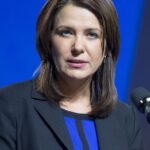
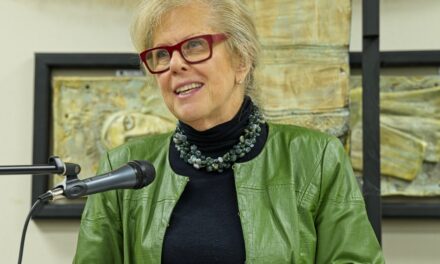
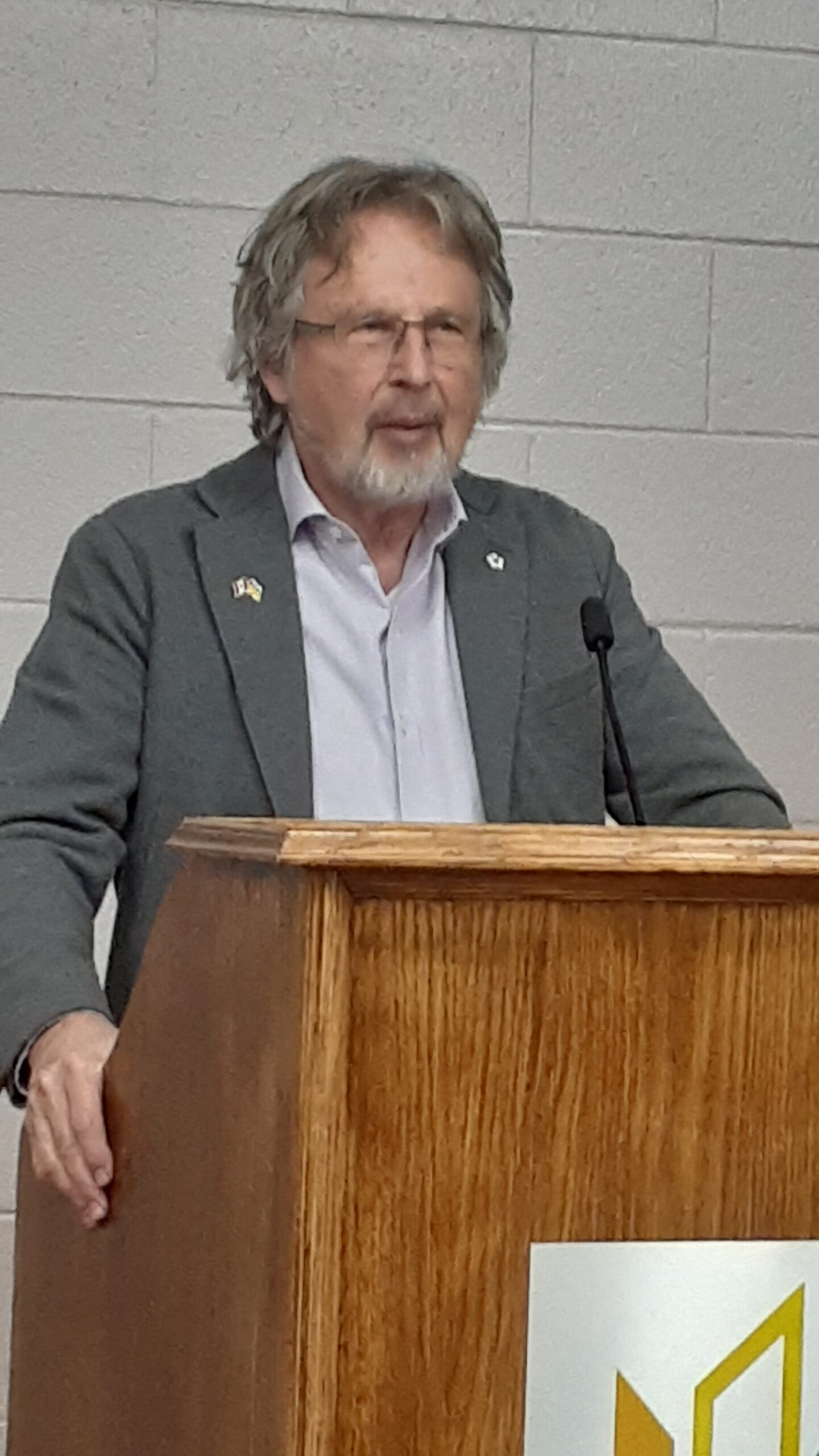
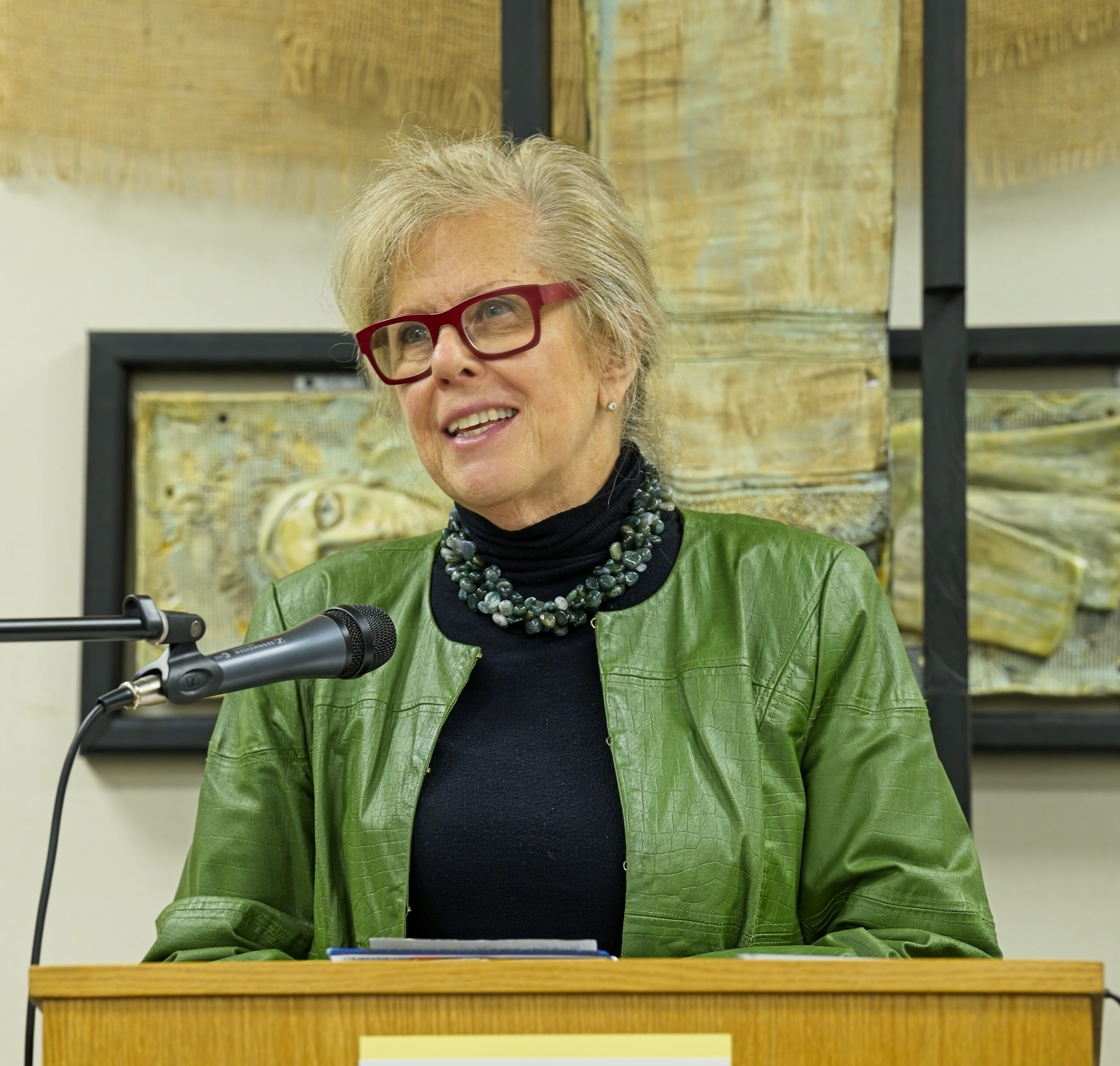
Speaking at a meeting organized by the Edmonton Branch of the League of Ukrainian Canadians at the Ukrainian Youth Unity Complex, December 5, Senator Dr. Stan Kutcher used the terms “debunking” and “prebunking”.
Debunking, he explained, is when someone sends out disinformation and you counter it. The trouble with that approach is that it’s defensive.
Pre-bunking is figuring out where this disinformation comes from and to start preparing the population beforehand.
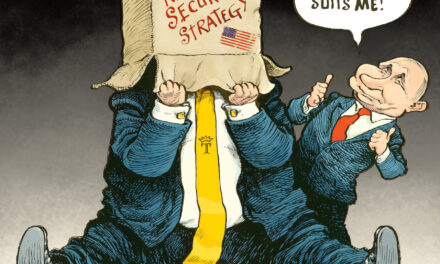
He cited as an example, U.S. President Donald Trump’s false charge that Tylenol causes autism. “We knew that because also we knew that for six months. (Health Secretary Robert F) Kennedy (Jr.) and his group were trying to figure out a way to blame autism on something.
“But nobody was pre-bunking, or people were not pre-bunking with enough force to immunize the population against the falsehood. And when it came out, people were scrambling to debunk,” Dr. Kutcher said.
As a community numbering 1.5 million, Ukrainian Canadians have to we have to engage themselves by creating support groups and a strategy on a national level..
“From Newfoundland to Vancouver Island, from 49th parallel to the top of the Arctic, it has to be national. The best time to have done this was in 2015. The second best time is now. So this is something that I think we need to do.
“We need to organize. We need to get the strength of the community to support this financially and …we have to create nodes, preferably in the east, centre, west, and north, that work with each other and with their large communication networks;” he said.
Dr. Kutcher noted that Russian disinformation in Canada is not new.
“When the Cold War ended and the walls came down, Russia didn't stop being at war. Today, Russia is at war with Canada and many other Western countries, but we don't understand that here in Canada.
“It's not a cold war. It is a war that comes from how information flows. It’s deliberate. It's highly targeted. And it is very, very sophisticated,” he said.
The first component are Russian bots, that is software programs that operate on the Internet and perform repetitive tasks automatically. Large bot farms pervade social media and “their whole purpose is to send pieces of Russian disinformation throughout our entire country”. They are “a malignant presence in social media”, Dr. Kutcher said
“We don't know the full scope of Russian bots… We don't know if that's the whole iceberg or just the tip of the iceberg. Our thinking about it is that it's the tip of the iceberg,” he added.
Another component is “what I call the useful idiots” a term coined, by Vladimir Lenin, founder of the Soviet Union, which refers to western observers who take Russian propaganda at face value;
“They take a piece of information from Russia. ‘Oh, the Ukrainians are Nazis. Oh, yeah, they're all Nazis’, Dr. Kutcher explained.
“Now the purpose of Russian disinformation, whether it's from bots or useful idiots, is to sow dissension in our society. It is to find fracture points where people disagree on something and cause us to fight with each other. Because by doing that they seek to weaken the institutions of democracy.”
He also took issue with the “legacy media’s” (mainstream media’s) tendency to provide both sides of the story when one side is truthful and the other is not.
Few reporters in the legacy media know their files and think that if they present one opinion they must present the other.
“Well, I tell them, if somebody says the world is flat, do you give them the same amount of time as someone who says the world is round? No. Why? Because the world is flat is a lie. Why would you do that with Ukraine? Makes no sense, but that's how they often do things, to show both sides of the story” said Dr. Kutcher.
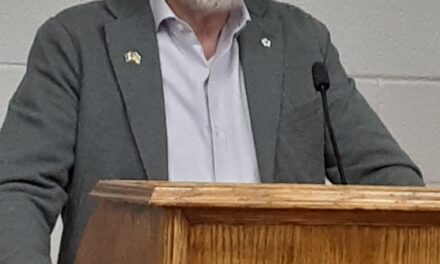
During the questions and answer period, New Pathway – Ukrainian News Western Bureau Chief Marco Levytsky said he disagreed with Dr. Kutcher’s assessment of the legacy media.
Referring specifically to Post Media, which controls 90% of newspapers in Canada, he said they only present one side of the story “and that's the Russian one”.
“I would say that the biggest culprit there is David Pugliesi, who writes for the Ottawa Citizen, and manipulates the facts in a most unethical manner to vilify Ukrainians and the Canadian armed forces at the same time. He has written many things that he has slanted deliberately towards the Russian side. He is not a useful idiot. He is fully conscious of what he is doing,” added Levytsky.
He also noted that when anybody tries to rebut him with the facts, Post Media will not print them
“We've had many occasions here where a lot of us have written to The (Edmonton) Journal or other newspapers, and we all came up with the same thing — they did not print our rebuttals, and that especially goes for the Citizen.”
“That's very well said,” answered Dr. Kutcher. “The issues that you raise are really important issues, and I can share with you my own frustration with getting things in the legacy media that I think are important for me to speak out on. And that ranges from stuff on Ukraine but also ranges from stuff on science.
“We have seen Fox News basically being an outlet for the Republican Party. And so what we have to do here is first realize that it is not in the interests of a functional democracy to have most of legacy media controlled by one group,” he added.
Another audience member, Lubomyr Markevych, noted that “In the post-World War II era, we had some of the most robust, positive media outlets that were projecting so-called Western values and information about Western societies, beginning with BBC, Voice of America, Radio Free Europe and others, including Radio International in Canada (RCI).”
This however has been greatly diminished. Long before Trump cancelled Voice of America, RCI lost 80% of its budget from 20 languages that it supported.
While working in Ukraine he was constantly asked what is going and asked Dr. Kutcher whether he had any insight on that.
Dr. Kutcher replied that he had no explanation “but what I want to point out is that how important those vehicles are.”
“When Mr. Trump cancelled Voice of America, there was a huge blow to being able to present democratic principles. Now, we are in trouble, those of us who believe in the value of democracy.
“If you look at the website Transparency International, you will see that over the years, the number of countries that are called democratic have diminished… And what we are seeing in Ukraine, in my opinion, is the clash of two huge world views. One world view which believes in an international order defined by an international rule of law, and an economic system that came out of the Bretton Woods agreement, the World Trade Organization, IMF, etc.
“And a world order that believes that might is right. This 28-point peace plan (proposed by Trump) was a real estate transaction. That's what it was. Pure and simple. A real estate transaction. Never in the history of humankind has the aggressor been able to say, ‘Well, I will have peace but only if you let me continue slaughtering civilians’.”
The son of Ukrainian refugees who came to Canada after World War II, Senator Kutcher has a deep personal connection to his heritage.
He actively advocates at the governmental level for sustained assistance to Ukraine and supports Ukrainian-led initiatives that help newly arrived Ukrainians integrate and contribute to Canadian society. He also introduced Bill S-210, establishing September as Ukrainian Heritage Month in Canada, and — together with two other Senators — made possible the first-ever celebration of Ukrainian Heritage Day within the historic walls of the Senate of Canada.
Share on Social Media