Maksym Nalyvaiko, Ukrinform, Ottawa.
The Canadian organization Mriya Aid (https://www.mriyaaid.ca/) was established shortly after the start of Russia's full-scale invasion of Ukraine. Founded by Canadian veterans and defence professionals, including those who served in Operation UNIFIER (https://www.canada.ca/en/department-national-defence/services/operations/military-operations/current-operations/operation-unifier.html) mission in Ukraine), and security and project management professionals supporting Ukraine as far back as 1991, the organization initially sent multiple 40-foot shipping containers of various aid to Ukraine in 2022: drones, night vision devices, tourniquets, and medical kits. In 2023, Mriya Aid decided to focus on a critical niche: supporting Ukraine’s demining efforts.
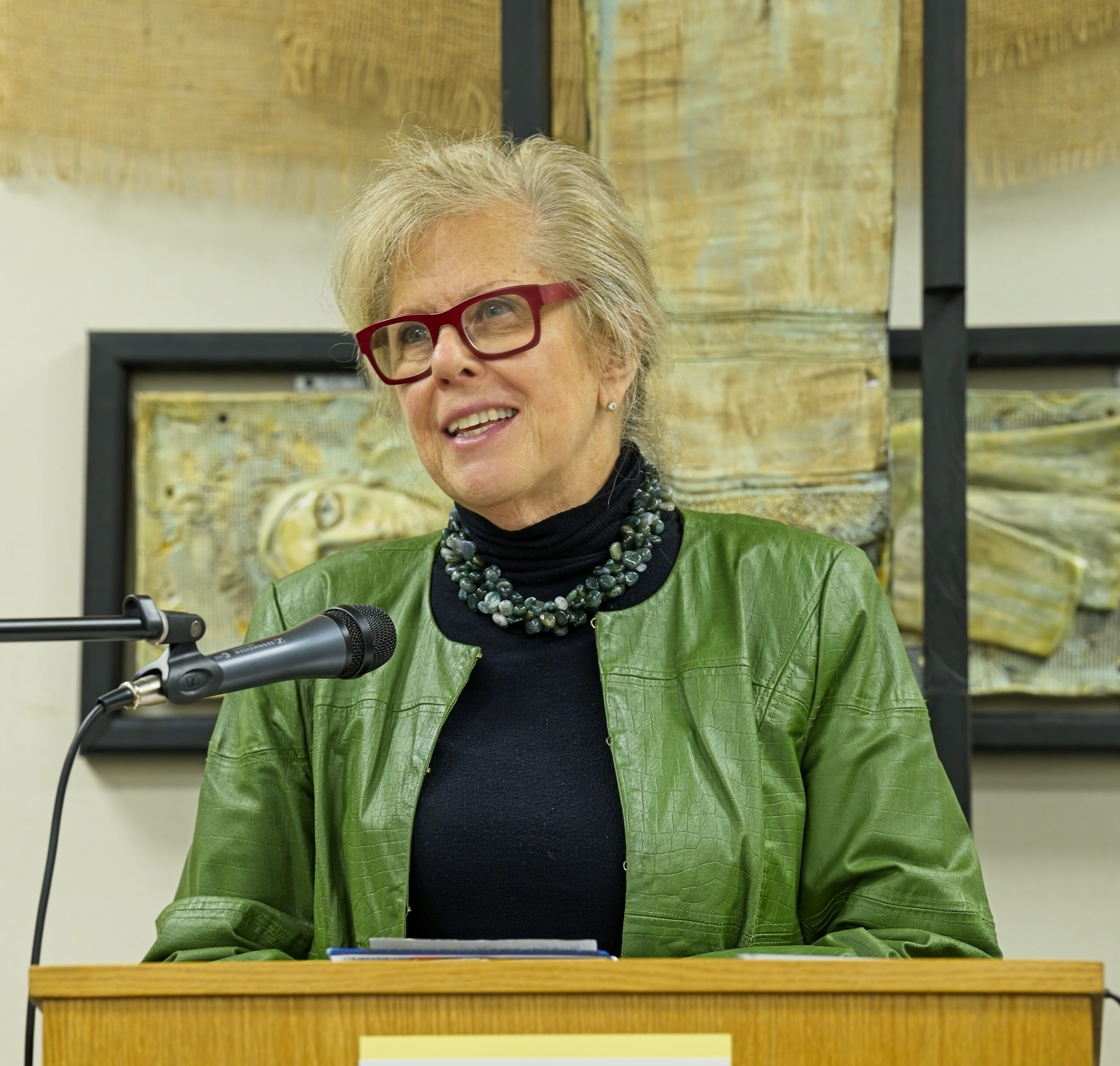
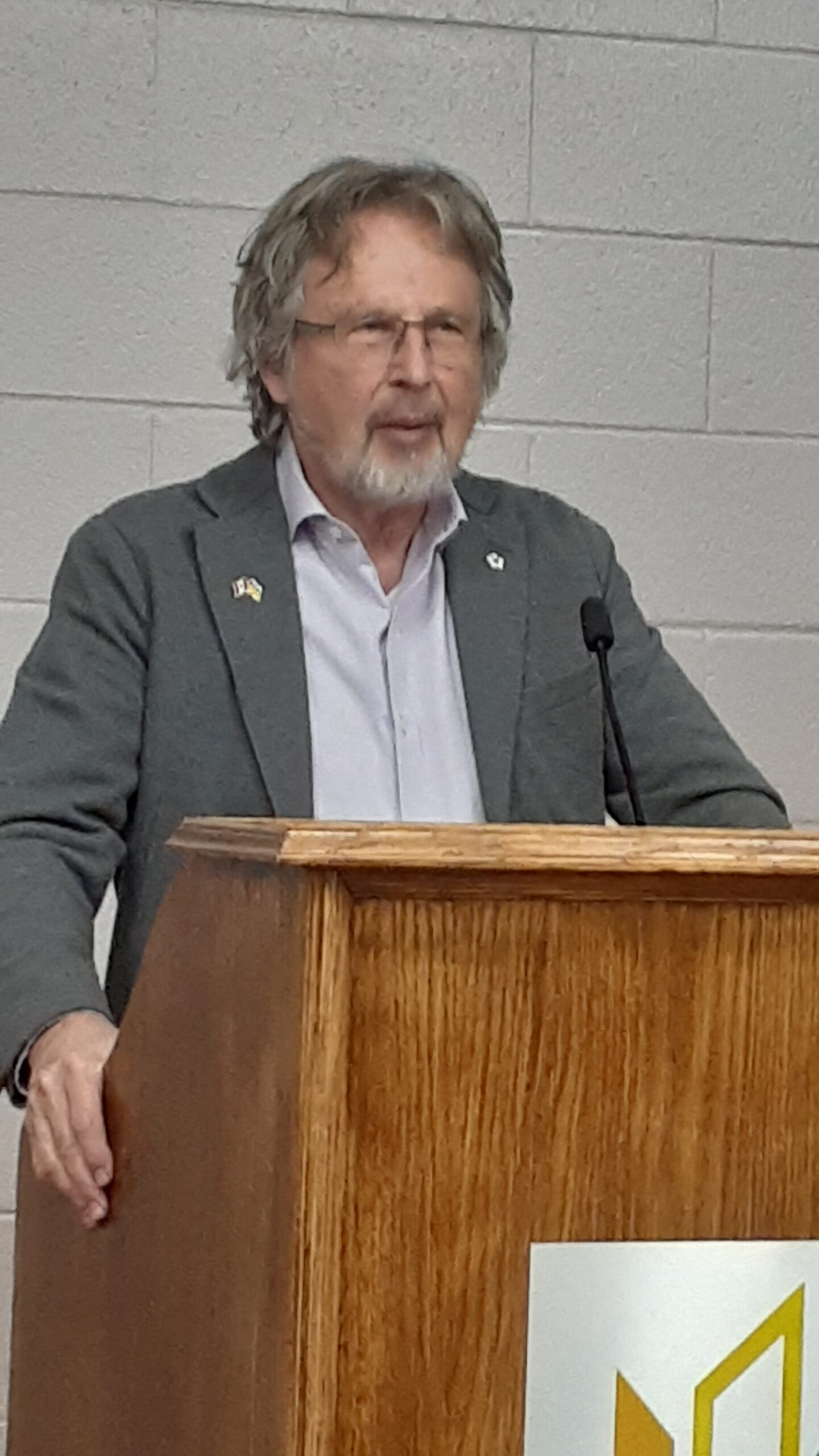
Ukrinform spoke with Mriya Aid’s Lesya Granger and Lubomyr Chabursky, who manage the organization’s efforts for Ukraine from Ottawa.

Lubomyr Chabursky and Lesya Granger
WE DO WHAT NO ONE ELSE DOES
- Ukraine is one of the most heavily mined countries in the world. How does your organization help address this crisis?
Lesya: Right now, Mriya Aid is focused on training Ukrainian service personnel undertaking demining work. We send sappers involved in operational demining near or on the frontlines and humanitarian demining in de-occupied territories to specialized IMAS (International Mine Action Standards) courses to be trained and certified. While major donors send demining machines (https://www.ukrinform.ua/rubric-society/4000742-koalicia-z-rozminuvanna-vze-peredala-ukraini-obladnanna-majze-na-piv-milarda-evro-posol-litvi.html), robots, and other equipment to Ukraine, we invest in people, because people are the most essential and valuable component in any mine action domain – especially in Ukraine today. Training directly improves their safety and survivability in this area of work. We support those who are clearing mines, tripwires, unexploded ordnance (UXO), and improvised explosive devices (IEDs) in real battlefield conditions or combat proximate zones.
- What is the difference between operational and humanitarian demining?
Lubomyr: In operational demining, there’s no time for a full risk assessment. Everything is fluid. Danger is everywhere, and any step could be your last. Especially now, as Russians are using new types of mines, including 3D-printed ones that metal detectors can’t identify, as well as seismic mines that react to footsteps or even sound. Grenades dropped by drones, and mortar shells strapped to FPV drones now pose a new explosive threat not seen anywhere in the world prior to russia’s invasion of Ukraine. Some of these do not explode when dropped, and are quickly becoming one of the most numerous explosive threats that sappers need to deal with.
Lesya: One of our friends, Chris Garrett, was recently killed in action (https://www.ukrinform.net/rubric-ato/3991972-australian-aid-worker-killed-in-ukraine.html) while performing a demining task. This tragic event reminds us just how dangerous this work is. Every skill, every piece of quality equipment, and every training session can make the difference between life and death.
UKRAINIAN DEMINERS TRAIN TO INTERNATIONAL STANDARDS
- How exactly do you help prepare sappers for such hazardous conditions?
Lubomyr: We partner with MAT Kosovo (https://www.pcm-erw.com/), a private training center recognized as the world leader in this area. There, Ukrainian sappers are trained according to IMAS (https://www.mineactionstandards.org/) . The courses last four to five weeks and include both theoretical and field training, including “demolition days” where participants practice to safely neutralize explosives themselves.
Lesya: We insist that our trainees complete the full course and certification exams so that they build reflexive awareness and muscle memory. When a person approaches an explosive, fear can freeze the brain, so their body has to act deliberately and automatically. Those kinds of skills save lives.
- Why did you choose to work with MAT Kosovo specifically?
Lesya: Because this center, co-founded by a veteran sapper who worked in the Balkans, provides the highest international standard of training. It has an impeccable safety record – there has not been a single incident in their 25 years of operation. MAT Kosovo managers also refuse to lower standards, even if that means forgoing lucrative contracts for projects that don't meet their high standards. They are very demanding of their students because quality training saves the lives not only of the deminer but also of his or her team and, ultimately, the community where the demining is taking place. In addition, they are very supportive of Ukraine, follow what is happening on the front lines, and always offer us favourable rates because they know we’re volunteers trying to stretch every dollar for maximum impact.
Lubomyr: Kosovo also has another advantage: there are no air raid sirens that constantly interrupt the learning process on training bases in Ukraine. This allows for much more efficient use of time and resources.
- Who decides who gets to go through this training?
Lesya: That’s determined by the Armed Forces of Ukraine – they know their personnel best. Our primary partner is the Ministry of Defence’s Main Directorate of Mine Action, Civilian Protection and Environmental Safety, which coordinates mine action in Ukraine with armed forces and state agencies working near the frontline. As project managers, we provide funding, logistics, and administrative support. We also encourage knowledge-sharing within units, because every graduate is a force multiplier, someone who can train up to five more colleagues. We’re focused on building strong IMAS-based knowledge chains within the system.
- Have you already seen concrete results from this support?
Lubomyr: Last year, we received $2.5 million from Canada’s Department of National Defence to train 130 Ukrainian deminers and provide them with equipment. The funding was provided under a very detailed budget and strict financial auditing requirements. The project deliverables came in under budget – this and additional funds from a variety of donors enabled us to expand the program for an additional 46 Ukrainian sappers. In total, the program resulted in 176 people trained. Some of them reached IMAS EOD Level 3+, meaning they are now qualified to train others and take on more complex tasks. That’s the multiplier effect in action.
Lesya: It’s important to note that the Canadian government sees the impact and invited us to submit new project proposals this spring. We’ve already done that and are now awaiting decisions on five new initiatives.
- What are these new projects about?
Lesya: The first two are training programs for the Armed Forces and the State Special Transport Service, with added investments in training center infrastructure. The third is about developing underground training facilities that can operate during air raids. The fourth is a program to support the integration of women into the security sector. And the fifth is the development of a framework for scaling innovations and new technologies in demining.
MORE WOMEN ARE CHOOSING THE DEMINING PROFESSION
- Let’s talk about gender. What role are women playing in mine action?
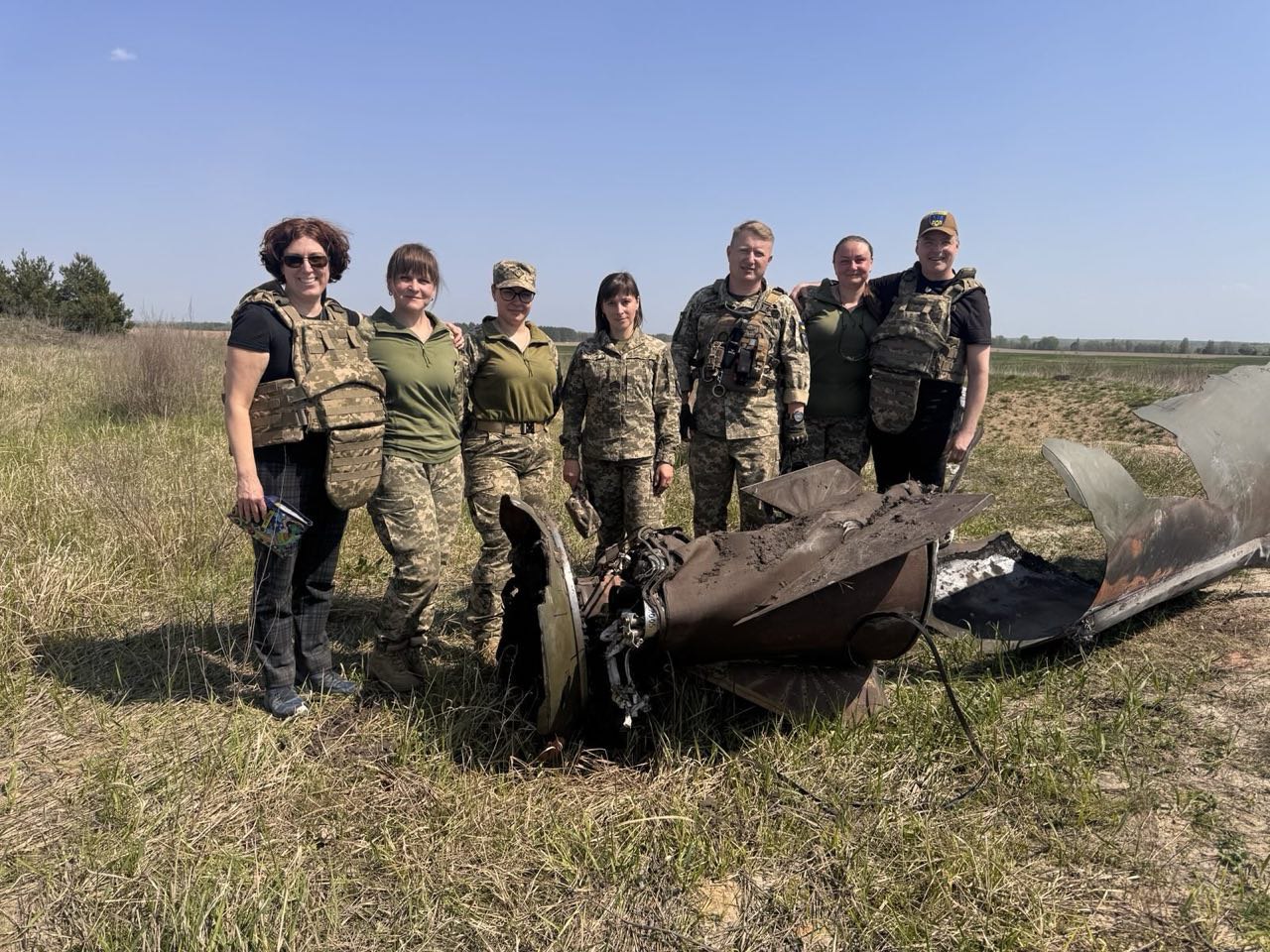
Lesya: Women are increasingly turning to demining and joining the profession. They go through the same courses and perform the same tasks. Some of the women who trained in MAT Kosovo back in 2022 are now leading teams or working as instructors in Ukrainian centers. While women make up just 11% of our students, they consistently rank among the top performers. Many are from eastern or occupied regions, and the work has deep personal meaning for them. We’re working on gender integration with the Ukrainian NGO Women’s Information Consultative Center (https://wicc.net.ua/), particularly with its founder Olena Suslova, a human rights defender nominated for the Nobel Peace Prize, who advises us on how to create conditions and systems that allow women to grow within the military structure.
- You mentioned scaling innovation. What do you mean by that?
Lubomyr: Ukraine is producing a lot of promising inventions: advanced metal detectors, drones, sensors – but they’re often limited to specific units. We want to help the Ministry of Defence develop a structure and system to test innovations in the field, modify and refine them for battlefront conditions, and then certify them for wide use by state agencies and armed forces working within 30 kms of the frontline.
- Why isn’t this being done directly by governments or other state partners?
Lubomyr: Because public service systems are often less agile and they rely on a tendering process which works more slowly than we do. We can act quickly and respond to what deminers on the ground really need. If a sapper tells us a certain detector isn’t working well, we look into it immediately and find better options. We visit training bases, speak with officers and sappers, and adapt projects to meet real needs.
- You mentioned the State Special Transport Service. Why does Mriya Aid work with them?
Lesya: During wartime, the SSTS is part of the Ministry of Defence. In peacetime, they handled infrastructure – such as roads and bridges. During the war, they became a combat engineering unit, performing demining to enable the construction or repair of infrastructure used by the military. Like the regular army, they’re short on engineers, equipment, and training – and that’s where we come in.
Lubomyr: The National Guard of Ukraine is in a similar position. Sappers play a key role in combat operations there as well. We’ve been working closely with the National Guard since the very beginning of the full-scale invasion.
- What about national standards for demining in Ukraine? Do you follow them?
Lesya: Yes, and we support harmonizing national standards with international ones. IMAS puts safety first; it tells sappers not to take unnecessary risks and to follow well-established protocols. Those who train under IMAS come back thinking differently, and that mindset gradually transforms the broader safety culture. Mriya Aid supports the implementation of best practices from Ukraine and abroad. We’re not imposing outside models; we’re giving sappers tools that genuinely save lives.
Lubomyr: Ukraine is leading in innovation, not just in demining, but in general. It’s the first country in history conducting large-scale demining during an active war of aggression and constant attack by a brutal enemy. That context forces innovation in both explosive threats and in the tools and methods to counter them.
VOLUNTEERING AS A WAY OF LIFE
- I was surprised to learn that you also support underwater demining.
Lubomyr: Yes, we submitted a separate proposal to support underwater explosive ordnance disposal (EOD). Ukraine’s SSTS and other agencies are developing facilities for sapper-divers. We want to help them with infrastructure, equipment, and training. It’s a very technical but crucial area – Russia often mines hydro structures like bridges and dams, and they need to be cleared.
- Who are the people implementing these projects? Who’s on the Mriya Aid team?
Lesya: In Canada, there are about ten of us. Each has a specific role in managing and growing the organization and its projects. For example, one of our board members, Mark Paine, a former military officer, completed IMAS Levels 1, 2 and 3 training at MAT Kosovo in the fall of 2024. That experience, alongside Ukrainian sappers who inform our team, helps explain to donors how this training improves results on the front line. In Ukraine, we have volunteers and project coordinators. We’re currently working on registering an official Mriya Aid Ukraine office so we can respond even more quickly to local needs. Without shared effort, scaling wouldn’t be possible.
- You do all this work as volunteers. What keeps you going?
Lubomyr: For us, this is a continuation of our family tradition of volunteering for Ukraine. We have the ability to help – and during a war, we feel obligated to act. I started volunteering back in the 1980s, working on Holodomor research. Lesya’s ancestors were running community schools and libraries in Western Ukraine generations ago. We’ve both supported student programs, led delegations, and worked with many organizations. When the full-scale war began, we couldn’t stand aside. Volunteering is our legacy – and we’re carrying it forward. For Lesya and myself, this is the best way for us to express our heritage and Ukrainian identity.
Lesya: We have the knowledge, the networks, the time, and the resources – so we have to put them where they’re needed most. When a sapper who’s completed our training walks up to us and says, “Thank you, you saved my life,” that gives us energy to keep going for another year.
Share on Social Media