Marco Levytsky, Editorial Writer
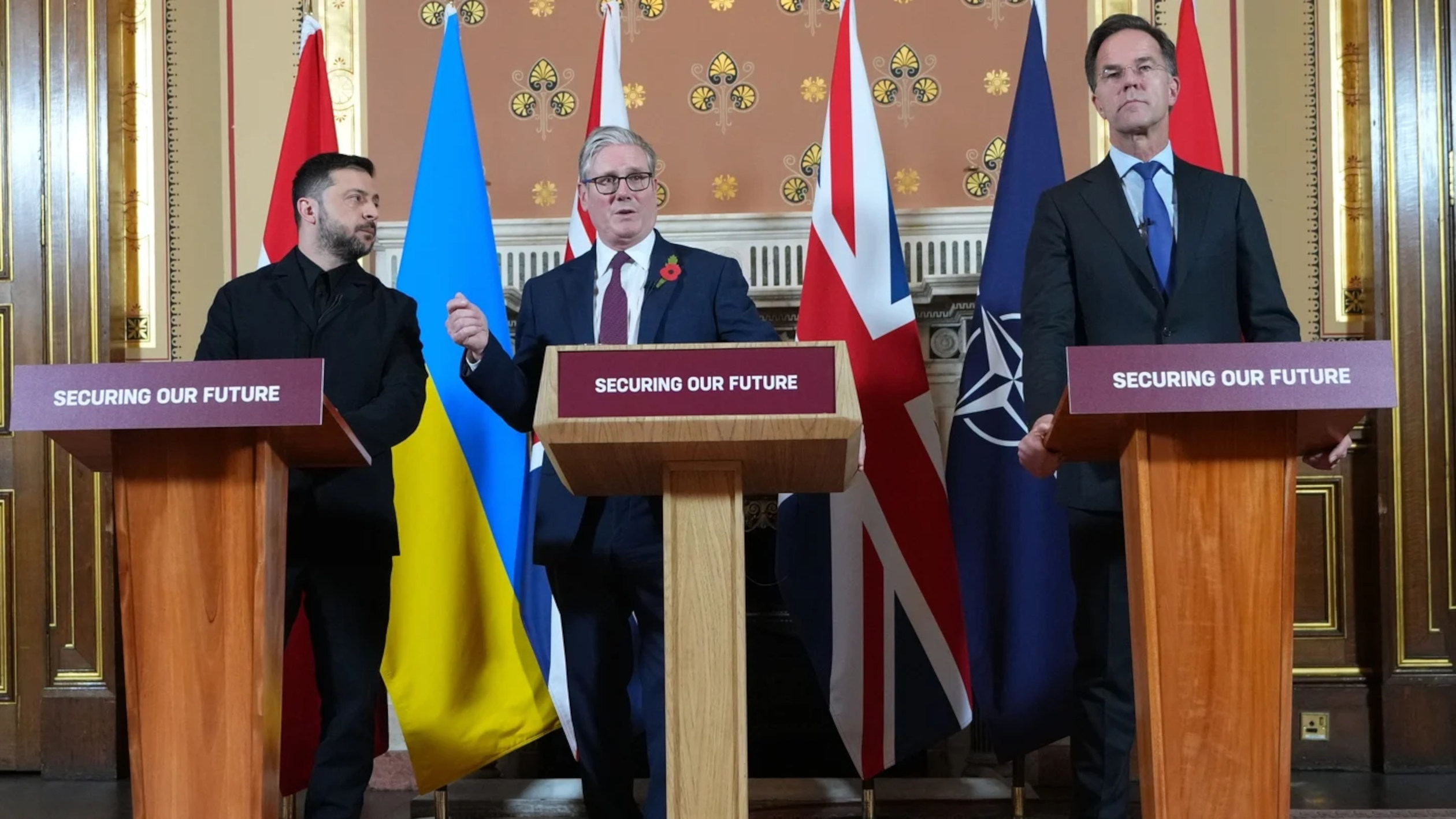
At a meeting of the “Coalition of the Willing” in London, October 24, the United Kingdom and the European Union agreed to work towards a deal that will allow them to use frozen Russian assets for Ukraine’s defence by the end of the year.
“Yesterday, the EU took a very important step forward, and there was absolute clarity in this afternoon’s meeting that we need to see that progress come to fruition within a short timetable,” said British Prime Minister Sir Keir Starmer as he urged allies to “finish the job”.
Mette Frederiksen, Denmark’s prime minister, said the EU was working towards a Christmas deadline to unlock up to €140 billion for Ukraine’s defence. This will be done in co-ordination with the UK, which holds £25 billion of frozen Russian money, and with other G7 allies including Japan.
But to finalize the deal, they will have to bring Belgium on board, as it holds the vast majority of frozen Russian Central Bank assets in the EU.
Belgium fears that if the assets are seized or repurposed improperly, it could be held liable and forced to repay the funds. As a result, it wants guarantees that the other EU countries will share the risk of potentially having to return the money and insists on establishing a clear legal framework, including an indemnity agreement, to share responsibility for using Russia's frozen assets to benefit Ukraine – something it says is still lacking.
The EU is working to address Belgium’s legal and financial concerns and the European Commission is drafting a legal framework that would ensure all member states act in unison, minimizing Belgium’s exposure.
Rather than directly seizing Russian assets, the EU is considering using the frozen assets as collateral for a massive loan to Ukraine. This approach is seen as less risky legally and more palatable to Belgium.
Under this plan, the EU would offer Ukraine a “reparations loan” backed by these frozen assets. This would allow Kyiv to borrow funds now, with the expectation that Russia will eventually be held liable for repayment. Some proposals suggest directly transferring portions of the frozen assets to Ukraine to cover war damages, infrastructure rebuilding, and humanitarian needs.
The potential benefits for Ukraine include:
- Massive Financial Relief: The reparations loan could unlock up to US$162 billion, giving Ukraine long-term financial breathing room;
- Sustained Defense Support: Funds could be used to maintain Ukraine’s military resistance against Russia;
- Reconstruction and Recovery: Financing would help rebuild destroyed cities, roads, hospitals, and schools; and
- Economic Stabilization: Infusions of capital would support Ukraine’s economy, currency, and public services during wartime and beyond.
Members of the coalition also endorsed new sanctions targeting Russia’s oil and gas sectors, aligning with recent measures from the U.S. and EU.
The Coalition of the Willing is a grouping of 33 countries, including Canada, which have pledged strengthened support for Ukraine against Russian aggression, as well as a readiness to be part of a peacekeeping force deployed on Ukrainian territory, either by providing troops or contributing in other ways. The peacekeeping force is envisaged only to be deployed once Ukraine and Russia sign a “comprehensive ceasefire agreement” or “peace deal” to settle the ongoing Russian genocidal war.
But that remains an obstacle. While Ukrainian President Zelenskyy has called for a full, unconditional ceasefire, Russian dictator Vladimir Putin remains obstinate. He is demanding that Ukraine pull its forces out of the Donetsk region, a key part of eastern Ukraine that Russia has partially occupied since 2014, despite the fact that Ukraine still controls about a quarter of the province and considers any voluntary forfeiture thereof to be a non-starter. This includes areas that form part of what Russia calls the “fortress belt,” a heavily fortified defensive line. For Ukraine that would be suicidal as it would clear the way for Russia to advance further into Ukraine with little resistance in a future assault.
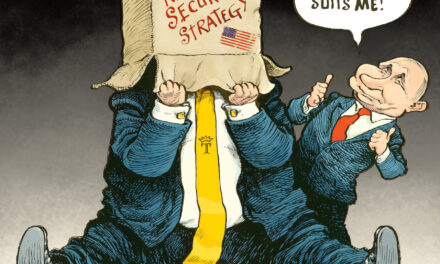
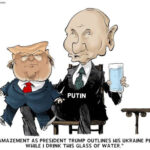
In a two-and-a-half-hour impromptu telephone conversation with the U.S. President on the eve of the latter’s earlier-scheduled meeting with Zelenskyy on October 17, Putin once again displayed his uncanny ability to influence Trump by cajoling him to accept Russia’s position on who should control Donetsk as part of an eventual resolution to the war. Reports indicate that so dramatic was the reversal in Trump’s position immediately following his phone conversation with Putin, that his meeting with Zelenskyy escalated into a shouting match. Trump allegedly pressured Zelenskyy to accept a peace deal more favorable to Russia, warning that Putin would “destroy” Ukraine if Kyiv didn’t compromise.
But, once again, after affording Putin the benefit of favourable territorial concessions Trump made no further progress with him on a framework for peace in Ukraine and, on October 21, called off a proposed follow-up meeting in Budapest, citing concerns that it would be unproductive. The next day he announced future sanctions to be imposed on Russia’s two largest oil companies, Rosneft and Lukoil, along with their subsidiaries.
Many observers welcomed this announcement as a significant escalation in economic pressure on Moscow, but this again was just a lot of rhetoric with no real substance.
In the first place, the U.S. already does very little business with either Rosneft or Lukoil. U.S. companies have already reduced direct dealings with Russian oil firms significantly due to earlier restrictions and reputational risks.
Secondly, as pointed out by Phillips P. O’Brien, Professor of Strategic Studies at St. Andrew’s University in Scotland, this latest announcement has provided a four-week grace period for foreign companies to buy as much Russian oil as they possibly can, safe in the knowledge that the earliest Rosneft and Lukoil can conceivably be sanctioned by the USA is November 21.
Even more disappointing is that the delay in implementing this latest round of sanctions against Russia, is that it leaves Rosneft and Lukoil free to plan and set up shell-companies, dummy organizations and the like to keep the oil flowing after November 21. Moreover, the question remains whether Trump will actually initiate such sanctions which, judging by his previous actions, is far from guaranteed. Quite tellingly, Trump continues to steadfastly refuse supplying Ukraine with Tomahawk long-range missiles that would allow it to hit military targets and oil refineries deep in Russia, and thus enable the beleaguered country to seriously degrade Moscow’s war machine.
While the steps taken at the London meeting of the Coalition of the Willing are a welcome step forward, much more support is needed. As long as Trump waffles and bends with whatever wind happens to blow his way, the United States cannot be counted upon to provide any serious commitment to a just peace. Therefore, the Coalition of the Willing must take a more forceful role in assuring global security. Indeed, a key consideration is whether there is any way to secure Ukraine, and indeed all of the West in general, from further Russian genocidal aggression so long as Russia remains a nuclear colonial power and a dictatorship.
Share on Social Media