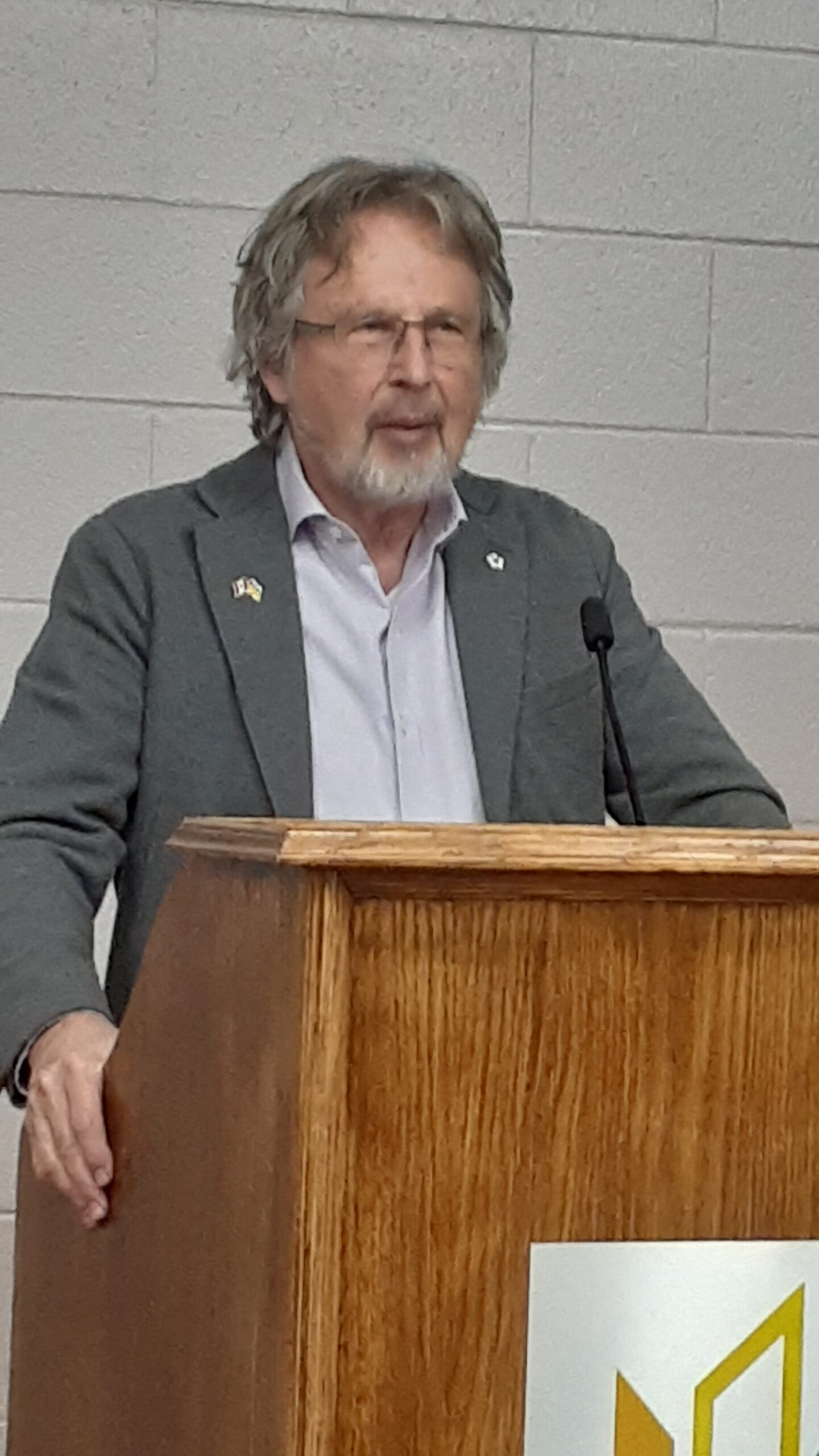
Marco Levytsky, Editorial Writer
Ontario Premier Doug Ford’s anti-tariff ads featuring a voiceover from former U.S. President Ronald Reagan’s 1987 radio address have stirred up a hornet’s nest on both sides of the border.
The campaign started airing in the U.S. in the first week of October and was officially confirmed by Ford’s office on October 14. In it, Reagan states:
When someone says, ‘Let’s impose tariffs on foreign imports,’ it seems they are doing the patriotic thing by protecting Canadian products and jobs. And sometimes, for a brief period, it works – but only temporarily.
“But over the long run, such trade barriers hurt every American worker and consumer.
“High tariffs inevitably lead to retaliation by foreign countries and the triggering of fierce trade wars.
“Then the worst happens. Markets shrink and collapse. Businesses and industry shut down, and millions of people lose their jobs.
“Throughout the world, there’s a growing realization that the way to prosperity for all nations is rejecting protectionist legislation and promoting fair and free competition.
“America’s jobs and growth are at stake.”
Initially, U.S. President Donald Trump stated that he had seen the ad on TV and didn't appear to be bothered by it. “If I was Canada, I’d take that same ad also,” he said on October 21 during a lunch with Republican senators.
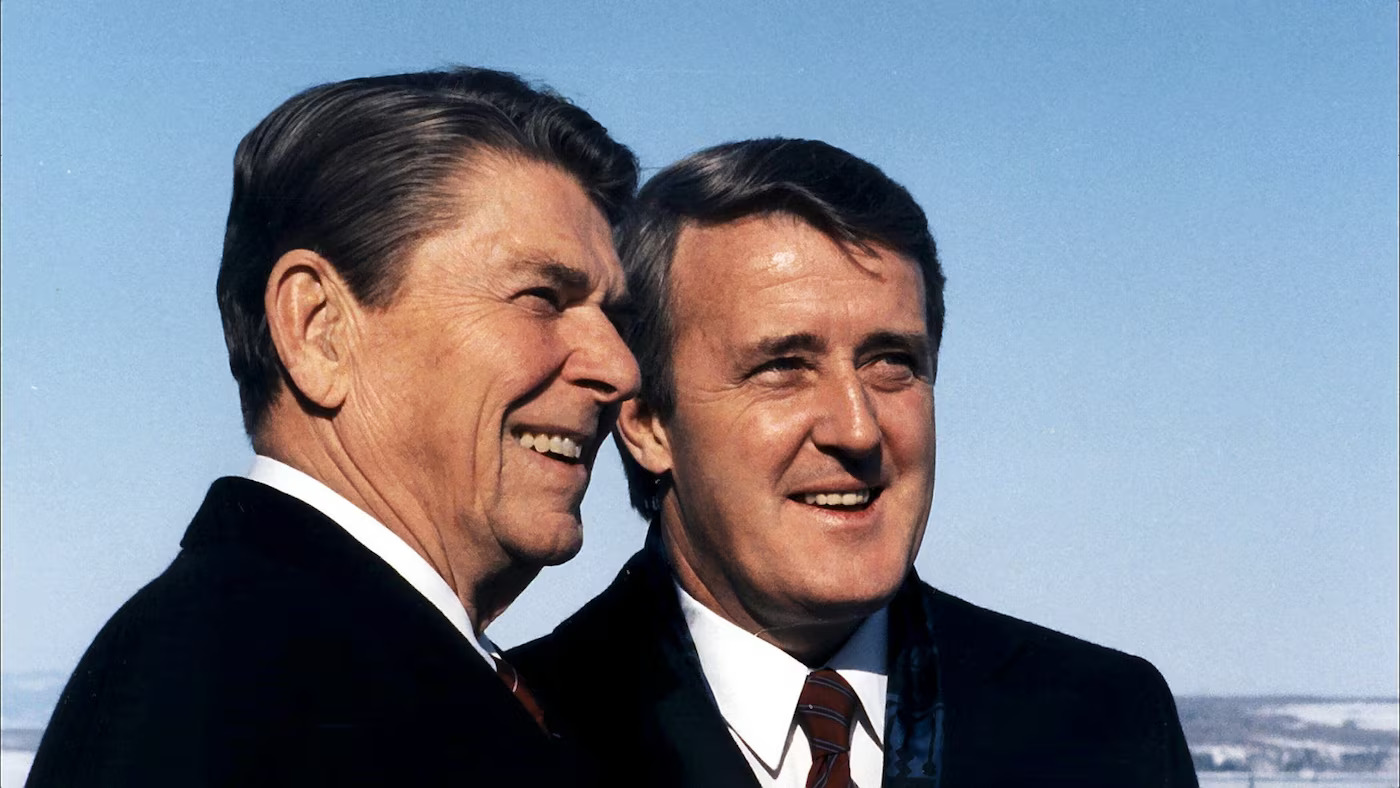
But two days later, he changed his tune, calling the ad “fraudulent,” claiming it misrepresented Ronald Reagan’s views and responding by halting trade talks and imposing new tariffs on Canadian goods. Trump claimed that Reagan “loved tariffs,” which is clearly false. Reagan was a strong supporter of free trade. It was Reagan who, along with then-Prime Minister Brian Mulroney, signed the groundbreaking Canada–United States Free Trade Agreement (CUSFTA) on January 2, 1988. In the radio address, whose excerpts were used by Ford, Reagan announced he was imposing tariffs on Japan only because they had violated the terms of their agreement with the United States but noted that it was an action “I am loath to take.” Meanwhile, Trump’s Ambassador to Canada, Pete Hoekstra, launched a profanity-laced tirade against Ontario’s Trade Minister David Paterson over the ads.
Ford kept them running during the first two games of the World Series before dropping them on October 27. Many observers called Ford’s decision to run the ads initially as “ill-advised”, even “stupid”, since he should have known that running these ads would anger Trump and cause him to retaliate against Canada.
After waffling for several days Prime Minister Mark Carney admitted he advised Ontario Premier Doug Ford not to run the ad and confirmed that he had apologized to Trump.
Ford defended the campaign, saying he would “never apologize” for standing up against what he called hostile trade actions. He also highlighted that the ads effectively drew attention to Ontario’s concerns in the U.S. media landscape.
They received significant attention in the U.S. media and even led to a Senate vote on October 29 to prevent Trump from further imposing tariffs on Canada. Four Republicans — Sens. Lisa Murkowski of Alaska, Susan Collins of Maine, Mitch McConnell of Kentucky, and Rand Paul of Kentucky — joined all Democrats in approving the resolution 50-46.
“These tariffs hit families, farmers, and small businesses the hardest, and in Kentucky they devastate cornerstone industries like car manufacturing, bourbon, homebuilding and shipping,” said Paul. “Congress must reclaim its constitutional authority and stop this economic overreach before more jobs and industries are destroyed.”
The resolution’s sponsor, Sen. Tim Kaine (D-Va.), argued that Trump cannot justify the tariffs on Canada under the International Emergency Economic Powers Act and risked “fracturing” the United States’ long-standing friendly relationship with its neighbour to the north.
This vote, however, was non-binding and would require support from the House of Representatives, which it is unlikely to receive. That, in itself, shows how far Trump has managed to stretch the limits of his constitutional authority, because tariffs fall under the jurisdiction of Congress, not the President.
Article 1 of the Constitution grants Congress the authority to “lay and collect Taxes, Duties, Imposts and Excises,” and it mandates that “Bills for raising Revenue shall originate in the House of Representatives.”
In issuing the executive orders that imposed the tariffs, Trump mainly relied on a 1977 law, the International Emergency Economic Powers Act. Section 1701 of IEEPA states that the president can use the law “to deal with any unusual and extraordinary threat, which has its source in whole or substantial part outside the United States, to the national security, foreign policy, or economy of the United States,” if he declares a national emergency “with respect to such threat.”
Trump imposed tariffs on Canada under the flimsy pretext that large amounts of fentanyl were crossing the border into the United States. In reality, the fentanyl originating from Canada accounted for less than 1% of all fentanyl seized nationwide by the U.S. Border Patrol and the Office of Field Operations last year. Data show that in Fiscal Year (FY) 2024, officials at the southwest border seized 21,148 pounds of fentanyl — most of which was intercepted from people, mostly American citizens, entering through legal ports of entry. Meanwhile, 43 pounds were seized from individuals crossing the northern border in FY 2024, with most of it captured by Border Patrol outside legal ports. This was an increase from just two pounds confiscated in FY 2023 and 14 pounds in FY 2022. In February 2025, the Canada Border Services Agency (CBSA) reported six fentanyl seizures, but these originated from the U.S. into Canada, not vice versa.
Claiming there was an emergency involving the inflow of fentanyl into the United States might have seemed plausible, but blaming the crisis on Canada was absurd. It’s like blaming a neighbour for weeds in your own garden. Saying that the numbers crossing the Canadian border pose an “unusual and extraordinary threat” is ridiculous. On November 5, the Supreme Court will begin hearing oral arguments in two challenges to Trump’s authority to impose broad tariffs on nearly all imported goods. Usually, the outcome should be clear, but Trump has filled the court with his supporters, and nothing is certain anymore. This court has granted him nearly complete immunity from any criminal charges related to his official actions as President.
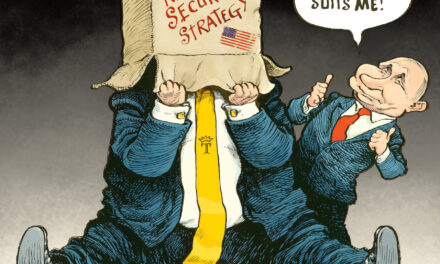
It is understandable why many countries flatter and kowtow to Trump the way he kowtows to Russian dictator Vladimir Putin. He is, after all, the leader of the most powerful country on earth. But all this only serves to feed his rapacious ego and claim victories that he shamelessly uses to boost his political standing. However, in the case of tariffs and many other measures, Trump has repeatedly violated the United States Constitution and has exerted such control over the Republican Party that members tremble at the thought of opposing him. If there is to be any return to normality in the United States, those same Republicans must find the courage to stand up for what is right and for the key principles of the Republican Party’s past. With four Republican Senators joining the Democrats in the tariff vote, cracks are beginning to appear. These cracks need to grow wider, which means informing Republican voters about how damaging Trump’s policies can be. Let’s face it, Trump aims to make Canada the 51st state and is using economic pressure to achieve that goal. As a result, negotiating with him is impossible as one would with a rational person seeking a mutually beneficial agreement. This tariff war harms both countries, and the American public must understand just how destructive it can be. Ford’s ad campaign did exactly that.
Share on Social Media